For nearly a century, the flying car has been the definitive symbol of a future that never quite arrived. It adorned the covers of Popular Mechanics, starred in sci-fi films from Blade Runner to The Fifth Element, and promised a world free from terrestrial gridlock. Yet, it remained perpetually “a decade away,” a byword for technological vaporware.
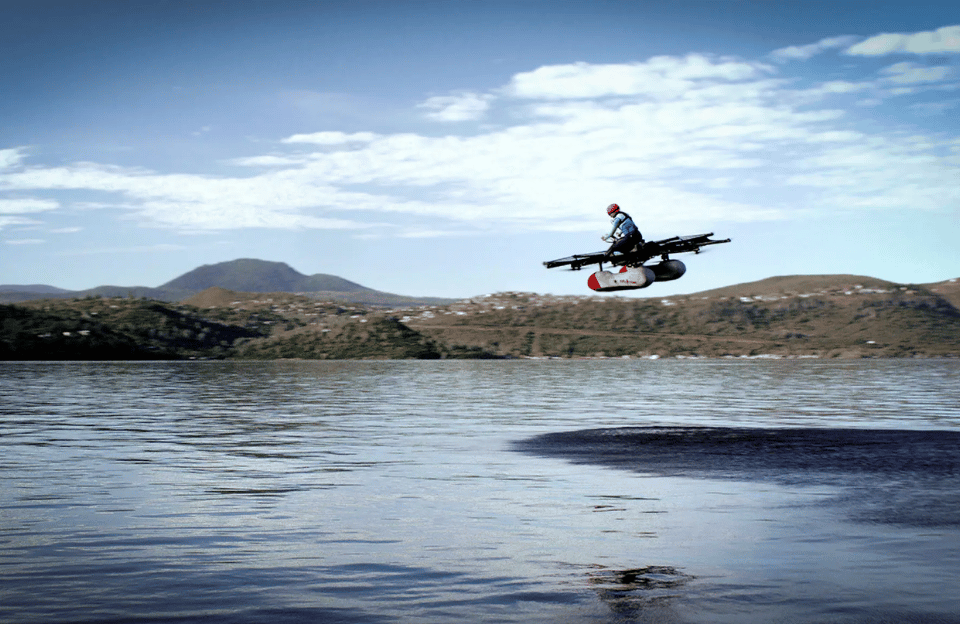
That decade, it seems, is finally here. But the revolution isn’t being led by traditional aerospace giants or Detroit auto titans. It’s being engineered in the hangars and software labs of Silicon Valley, where a potent mix of venture capital audacity, software-first philosophy, and Moore’s Law is transforming the dream into a deployable product. This is not your grandfather’s flying car. It’s an electric Vertical Take-Off and Landing vehicle (eVTOL), and its arrival heralds a fundamental reimagining of urban mobility, freight logistics, and the very geometry of our cities.
From Jalopy to Jetson: The Silicon Valley Playbook
The Valley’s approach is distinct, breaking from a century of failed prototypes. Traditional attempts often tried to literally marry a car and a plane, resulting in heavy, compromised “roadable aircraft” that were mediocre at both. Silicon Valley’s ethos is one of divergence and specialization.
Companies like Joby Aviation, Archer Aviation, Wisk Aero (backed by Boeing and Kitty Hawk), and Beta Technologies are not building cars that fly. They are building electric aircraft designed for short, frequent, point-to-point urban and regional hops. They look more like oversized drones or sleek, small helicopters than Chitty Chitty Bang Bang.
The Valley’s core advantages are being leveraged in key areas:
-
Electric Propulsion: The exponential improvement in battery energy density, driven by the electric vehicle race, is the foundational enabler. Electric motors are simpler, quieter, more reliable, and offer distributed propulsion (multiple small rotors) for inherent stability and safety. This bypasses the complexity, cost, and noise of traditional internal combustion or jet engines.
-
Autonomy and AI: The true secret sauce. Silicon Valley firms are betting heavily on full or highly assisted autonomy. The complexity of piloting in dense urban environments requires superhuman reaction times and spatial awareness. Companies are developing AI pilots that can manage thousands of data points from lidar, radar, and cameras, navigating 3D air corridors, avoiding other aircraft, and handling emergency landings. This also solves the pilot shortage problem and aims to make rides affordable at scale.
-
Agile Development & Simulation: Borrowing from software development, these companies build, test, and iterate at breathtaking speed. They rely heavily on digital twins and massive simulation—”flying” millions of virtual miles in every conceivable failure scenario—long before metal is cut. This allows them to compress certification timelines that would stymy traditional aerospace.
-
The “Full-Stack” Model: True to form, Valley players aren’t just building vehicles; they aim to control the entire ecosystem. This includes the vertiport (takeoff/landing pad) network, the air traffic management software (UTM — Urban Air Mobility), the passenger booking app, and the maintenance infrastructure. They see themselves as the Uber or Airbnb of the skies, not just the airframe manufacturer.
The Contenders and Their Visions
The landscape is buzzing with well-funded players, each with a slightly different vision for the dawn of the third dimension.
-
Joby Aviation: Arguably the furthest along, having acquired Uber’s Elevate program and with years of clandestine testing. Their five-seat, tilt-rotor aircraft boasts a 150-mile range and near-silent hover. They have a landmark partnership with Delta Air Lines for “home-to-airport” service and are deep in the rigorous FAA certification process, eyeing commercial launch by 2025.
-
Archer Aviation: Focused on the urban commute, its “Maker” aircraft is designed for rapid, back-to-back 20-50 mile trips. A strategic partnership with United Airlines, including a conditional order for 200 aircraft, signals a clear path to market, initially for airport transfers.
-
Beta Technologies: Taking a pragmatic, dual-use approach. Their ALIA aircraft, which looks like a sleek, fixed-wing mini-cargo plane, is being developed concurrently for cargo (with partners like UPS) and passenger missions. They are building a nationwide charging network, understanding that infrastructure is key to adoption.
-
Wisk Aero: A joint venture between Boeing and Larry Page’s Kitty Hawk, Wisk is going all-in on autonomy. Their 6th-generation aircraft is a fully self-flying, four-seat eVTOL. They argue that autonomy from day one is essential for safety, scalability, and cost reduction.
The Mountain of Challenges: Regulation, Noise, and the “Why?”
The technological hurdles, while immense, are being overcome. The greater challenges exist off the drawing board.
-
The Certification Gauntlet: The Federal Aviation Administration (FAA) and its global counterparts (EASA in Europe) are writing the rulebook in real-time. Certifying a novel, electric, multi-rotor aircraft for commercial passenger service is a monumental task. Safety must be beyond commercial aviation standards (which is already incredibly safe). The process is slow, meticulous, and absolutely critical—a single high-profile accident could set the entire industry back a generation.
-
The Infrastructure Abyss: Where do these vehicles take off and land? Building a network of “vertiports” in dense, expensive urban cores is a real estate and regulatory nightmare. Rooftops, parking garages, and helipads are being eyed, but community opposition (“NIMBY” becomes “NIMSKY”—Not In My Sky) is a formidable force.
-
The Noise Equation: “Quiet” is relative. While eVTOLs are significantly quieter than helicopters, a sky filled with hundreds of them during rush hour presents a new acoustic environment. Public acceptance hinges on this.
-
Economic and Equity Realities: Initially, this will be a premium service—an “air taxi” for the wealthy or for time-critical business travel. The dream of an affordable, personal flying car for the masses remains distant. The question of whether this will simply create a 3D highway for the 1%, exacerbating urban inequality, is a serious societal concern.
The Transformative Horizon
If these challenges are navigated, the impact could be profound. The promise isn’t just about skipping traffic; it’s about reconfiguring geography.
-
The 60-Mile Commute Becomes 20 Minutes: Suddenly, affordable housing in Stockton could be a viable commute to San Jose. This could radically disperse urban pressure and change real estate dynamics.
-
Reinventing Logistics: Same-hour delivery of medical supplies, organs for transplant, or critical spare parts could become routine. The “middle mile” of logistics could leapfrog congested highways.
-
The Emergence of the “Aerotropolis”: Cities might develop new hubs around vertiport clusters, blending residential, commercial, and transport functions in a truly three-dimensional urban plan.
Conclusion: The Dream, Deferred but Not Denied
Silicon Valley’s bet is that the convergence of its core competencies—software, electrification, and a tolerance for high-risk, high-reward innovation—has finally cracked a century-old problem. They are not selling a flying car; they are selling a new layer of transportation infrastructure.
The journey from prototype to a humming, integrated network in our skies will be messy, iterative, and fraught with setbacks. The initial reality will be more modest than the Jetsons fantasy: a premium shuttle service, not a parked spinner in every driveway.
Yet, the trajectory is clear. The dream of effortless three-dimensional movement, which has captivated humanity since Da Vinci sketched his ornithopter, is being rendered into carbon fiber, lithium-ion cells, and lines of code. The age of urban aviation is dawning. It won’t look like we imagined, but for the first time, it is no longer a question of if, but how and when. Silicon Valley, with its eyes firmly on the sky, is determined to write that answer. The flying car is no longer a dream; it is a demanding, complex, and breathtakingly ambitious engineering project. And it is officially underway.