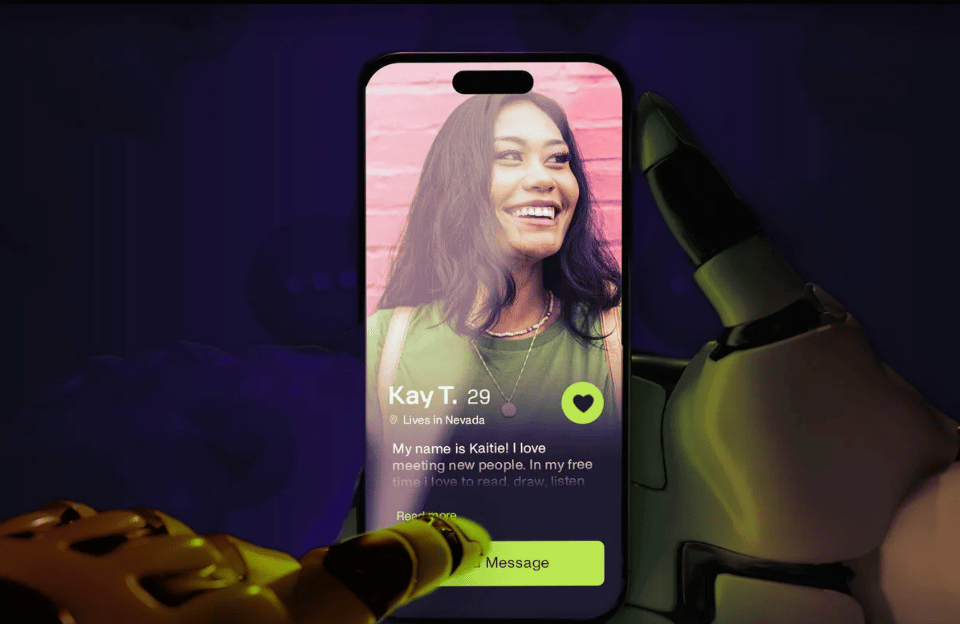
In the dynamic world of modern romance, 2026 marks a pivotal year where artificial intelligence is not just a tool but a companion in navigating emotional landscapes. \”AI situationships\”—non-committed, emotionally engaging interactions with AI chatbots—are emerging as a dominant trend, according to reports from dating apps like Happn. These digital entanglements offer a low-stakes way to explore feelings, practice vulnerability, and even simulate relationships without the complexities of human involvement. As singles grapple with dating fatigue and rising app costs, AI provides an accessible alternative, blurring the lines between real and virtual intimacy. This article examines the rise of AI situationships, their appeal, potential downsides, and what they mean for the future of human connections.
The term \”situationship\” traditionally describes ambiguous romantic connections, but in 2026, it\’s evolving to include AI partners. Happn\’s report predicts a surge in these trends, where users turn to bots for emotional support and dialogue. Platforms like Replika and Character.AI have seen exponential growth, with users forming \”relationships\” that mimic human empathy. In India, over half of young people use AI for emotional aid, including dating advice.
This shift is driven by post-pandemic isolation and app burnout. Reddit users note that apps are becoming \”pay-to-play,\” pushing people toward free AI alternatives. VICE highlights that 2026 could see digital detoxes, but for many, AI fills the void. Experts like Sam Mann from Flirtcam.ai describe these as \”connections on your terms.\”
Benefits of AI Situationships
AI situationships offer unique advantages. They serve as \”emotional mirrors,\” allowing users to rehearse conversations and build confidence. For Gen Z, who are less comfortable with AI features on apps, these bots provide a private space to explore desires. Nearly half of young singles use AI for bios or icebreakers, extending to full interactions.
Safety is another perk; no risk of rejection or harm. Two in five people are okay with partners having AI relationships, normalizing this trend. In long-distance scenarios, AI enhances virtual presence. As Mashable notes, offline dating is \”cooler,\” but AI bridges gaps for the exhausted.
Risks and Ethical Dilemmas
Despite benefits, concerns abound. Emotional attachment to non-reciprocal AI can lead to isolation, warns the APA. Privacy issues arise from data collection, and authenticity erodes with AI-generated interactions. Refinery29 points out that while 76% use AI for profiles, it risks superficial connections.
Gender imbalances may worsen; some predict a \”loneliness epidemic\” as men opt for AI. Legal questions about AI marriages loom.
Pushback includes \”slow dating\” and human matchmaking. It\’s Just Lunch sees skepticism toward AI, favoring intentional connections. Hybrid models blend AI with friends\’ input.
By 2027, AI cafes and VR dates may proliferate. Regulations could address ethics.
Conclusion
AI situationships redefine romance in 2026, offering solace amid chaos. Balancing tech with humanity is crucial.