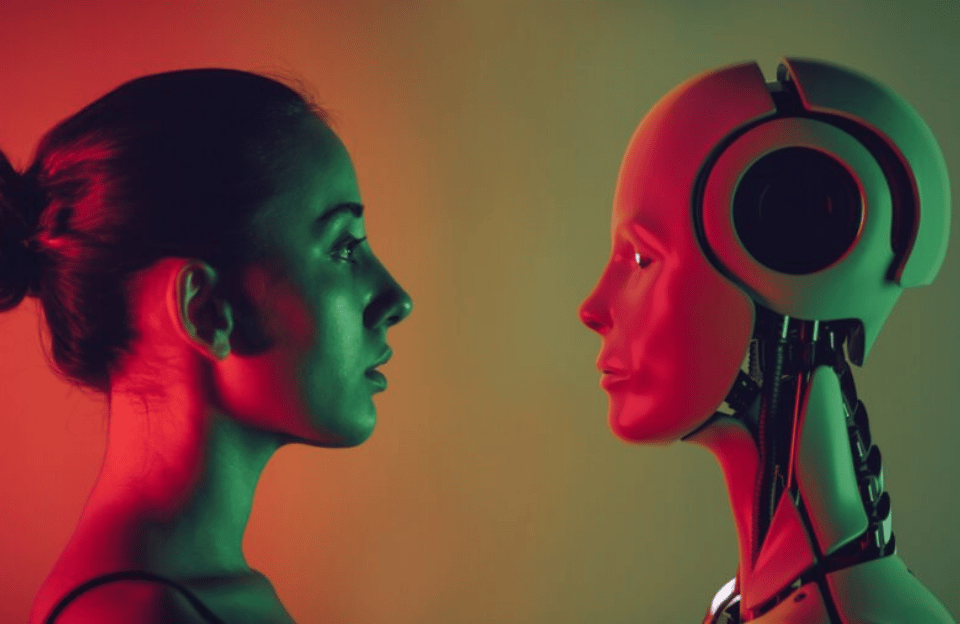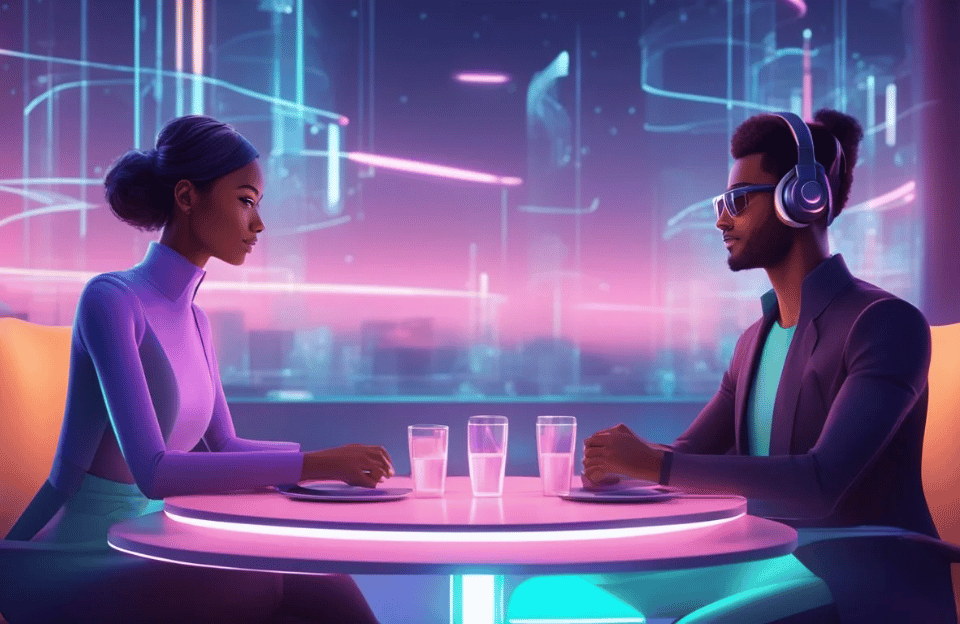
In the ever-evolving landscape of human connection, artificial intelligence (AI) has emerged as a transformative force, reshaping how we find, foster, and even fabricate relationships. As we navigate through 2026, AI\’s integration into dating is no longer a novelty but a mainstream phenomenon. From AI-powered matchmaking algorithms to virtual companions that simulate emotional intimacy, the boundaries between human and machine interactions are blurring. This article explores the latest trends in AI dating, drawing on insights from industry experts, app developers, and user experiences. We\’ll delve into how these technologies are enhancing accessibility to romance while raising ethical questions about authenticity, privacy, and the future of love itself.
The Rise of AI in Dating Apps
Dating apps have long relied on algorithms to suggest matches, but in 2026, AI has taken this to unprecedented levels. Platforms like Tinder and Hinge are embedding generative AI to refine user experiences. For instance, Tinder\’s \”Chemistry\” feature uses AI to analyze conversation patterns and predict compatibility before users even meet. This isn\’t just about swiping right; it\’s about creating \”smarter\” connections based on behavioral data rather than static profiles.
Hinge, on the other hand, introduced \”Convo Starters,\” an AI tool that suggests personalized opening messages to reduce the awkwardness of initial interactions. According to Mashable\’s predictions, you can\’t spell \”dating\” without \”AI\” anymore, as these features become integral to combating user fatigue from endless swiping. A report from Hello Magazine highlights how AI is optimizing profiles, coaching virtual dates, and enhancing safety measures, potentially transforming matches in profound ways.
But why the surge? In a post-pandemic world, where social isolation lingers, AI offers efficiency. A Reddit discussion on online dating in 2026 notes that apps are shifting toward curated experiences, with AI curating matches based on chat behavior and preferences. This trend is backed by data: nearly half of Gen Z singles have used AI in their dating journey, from crafting bios to generating icebreakers.
AI Companions: The New Emotional Frontier
Beyond traditional apps, AI companions are redefining companionship. Apps like Replika and Character.AI allow users to build romantic relationships with chatbots designed to mimic human empathy. These \”digital friends\” have seen a 700% surge in usage between 2022 and 2025, with projections for even greater adoption in 2026. Users can \”marry\” their AI partners in virtual ceremonies, blurring lines between fantasy and reality.
The American Psychological Association reports that these tools are embedding deeper into social lives, marketed as friends, advisors, or lovers. For many, especially younger demographics, this fills gaps left by real-world burnout. Happn\’s 2026 report predicts the rise of \”AI situationships\”—non-committed, emotional interactions with bots that serve as \”training wheels\” for real relationships. Two in five people wouldn\’t mind their partner having a close AI relationship, indicating shifting norms.
This trend extends to virtual reality (VR) and augmented reality (AR), where users can \”date\” in immersive environments. Ambiance Matchmaking speculates that by 2026, AI could enable falling in love with virtual entities, inspired by films like Her. Platforms like Flirtcam.ai emphasize that AI companions provide connection on users\’ terms, ideal for those exhausted by traditional dating.
Benefits of AI in Dating
AI\’s advantages are multifaceted. First, it democratizes access to dating advice. Tools like AI coaches help users practice boundaries, rebuild confidence, and simulate conversations. For introverts or those in remote areas, this lowers barriers to entry.
Second, enhanced matchmaking reduces mismatches. By analyzing vast datasets, AI predicts chemistry more accurately than human intuition alone. Bumble and others are using AI to refine suggestions based on interaction history, leading to higher satisfaction rates.
Third, safety features are bolstered. AI detects red flags in profiles or chats, flagging potential scams or harassment. In 2026, with rising concerns over deepfakes, these tools are crucial.
Moreover, AI fosters self-improvement. Users report using bots to explore desires and vulnerability without judgment. As Tinder notes, daters in 2026 balance \”talking and feeling,\” seeking meaningful chemistry without overcomplication.
Risks and Ethical Concerns
However, AI dating isn\’t without pitfalls. Privacy is a major issue; apps collect sensitive data on preferences and behaviors, raising risks of breaches or misuse. The APA warns of emotional attachment to non-reciprocal entities, potentially leading to isolation.
Authenticity suffers too. With AI-generated profiles or messages, distinguishing real from fabricated becomes challenging. Refinery29 highlights that while 76% would use AI for bios, it risks diluting genuine connections.
There\’s also the \”pornification\” of AI, as noted in critiques of platforms generating erotica. This could warp desires and hollow out real intimacy. Gender dynamics are affected; some fear a \”female loneliness epidemic\” as men turn to AI companions.
Economic shifts loom: rising app prices make dating \”pay-to-play,\” exacerbating inequalities. And with AI independence debates, legal questions about AI relationships and marriages arise.
Counter-Trends: The Pushback Against AI
Amid AI dominance, counter-trends emerge. VICE predicts \”digital detox dating,\” where singles eschew apps for offline connections. Mashable agrees, forecasting that offline will be \”cooler than ever.\”
Dating fatigue drives this; It\’s Just Lunch reports growing skepticism toward AI, with preferences for human matchmaking. \”Slow dating\” emphasizes intentionality over speed.
Hybrid approaches blend AI with human elements, like Wingman\’s friend-vetted matches. Sixty and Me stresses authenticity, viewing AI as a \”warm-up\” not the destination.
Future Predictions for AI Dating
Looking ahead, 2026 could see AI cafes for virtual dates, as EVA AI pioneered in New York. Long-distance relationships might thrive via AI-mediated VR.
Experts like Sam Mann foresee personalized relationships defying traditions. LinkedIn discussions predict AI marriages by 2026. Economic Times highlights \”hot take dating,\” where bold AI-facilitated conversations reshape romance.
Yet, regulations may temper this. Calls for ethical AI design focus on privacy and utility trade-offs.
Conclusion
AI dating trends in 2026 promise innovation but demand caution. As tools evolve, balancing tech with humanity is key. Whether enhancing matches or providing companions, AI could enrich love—if we navigate its complexities wisely.