In the hidden world of pollination, success is written in dust. Not the dust of neglect, but a precious, living dust—pollen grains—that fuels ecosystems and global food supplies. A new generation of photographers and scientists, armed with cutting-edge macro lenses and high-speed cameras, is capturing this microscopic ballet, revealing the astonishing mechanics and urgent challenges within one of Earth\’s most vital processes.
The Art of Seeing the Invisible
Pollination photography has moved far beyond a simple snapshot of a bee on a blossom. Today’s practitioners combine the patience of a naturalist with the technical skill of a studio photographer.
\”You\’re not just taking a picture; you\’re witnessing a transaction that dates back millions of years,\” explains Lena Vogel, a renowned ecological photographer. \”The goal is to freeze that moment of contact—the precise instant the pollen sacs, or anthers, dust the pollinator, or when a grain lands on the sticky stigma of a flower. That\’s the handshake.\”
To capture this, photographers use specialized techniques:
-
Focus Stacking: Taking hundreds of images at different focal points and combining them to create a single, impossibly deep-focused portrait of a tiny subject.
-
High-Speed Flash: Freezing the blur of a hummingbird\’s wings at 1/50,000th of a second to reveal individual feathers and suspended pollen.
-
Controlled Lighting: Using diffusers and reflectors to sculpt light around a subject the size of a raisin, highlighting the texture of a fuzzy bee\’s leg or the glistening nectar guide on a petal.
More Than Beauty: The Science in the Frame
These hyper-detailed images are powerful scientific tools. Researchers now use photographic surveys to monitor pollinator health, identify species interactions, and document the effects of environmental change.
Dr. Aris Thorne, an entomologist at the Cedar Creek Ecosystem Observatory, uses time-lapse photography at flower patches. \”We can quantify visit frequency, duration, and even estimate pollen loads on different insect species. A photograph can show us a bumblebee with a barely visible dusting of pollen, versus one coated like it\’s been in a bakery. That tells a story about flower fidelity and foraging efficiency.\”
One critical area of study is pollen deposition. By photographing the same flower stigma over time, scientists can track how many pollen grains from compatible plants arrive versus incompatible or invasive species, offering direct insight into reproductive success.
The Crisis, Captured
The haunting power of this photography also lies in what it sometimes fails to find. Projects aiming to document pollinator diversity in agricultural regions sometimes return with frames filled with lush crops… and no bees. This visual absence is a stark data point.
Conversely, poignant images tell powerful stories: a single honeybee struggling to lift a full pollen basket; a monarch butterfly nectaring on the last milkweed plant in a developed field; a native squash bee, adapted to a specific flower, finding its host plant replaced by a non-native ornamental.
\”The dust is a indicator,\” says Vogel. \”When you see a bee thoroughly dusted, you know it\’s been working effectively. When you see clean bees, or worse, no bees at all, the entire system is signaling distress.\”
The Unlikely Players
While bees get most of the attention, photographers are illuminating the full cast of the pollination play:
-
Wind Pollination (Anemophily): Captured using black backgrounds and side lighting, the ethereal clouds of pollen released from oaks, grasses, and conifers.
-
Night Shift: Using infrared and sensitive low-light cameras to spy on moths, bats, and even nocturnal beetles visiting pale, fragrant flowers.
-
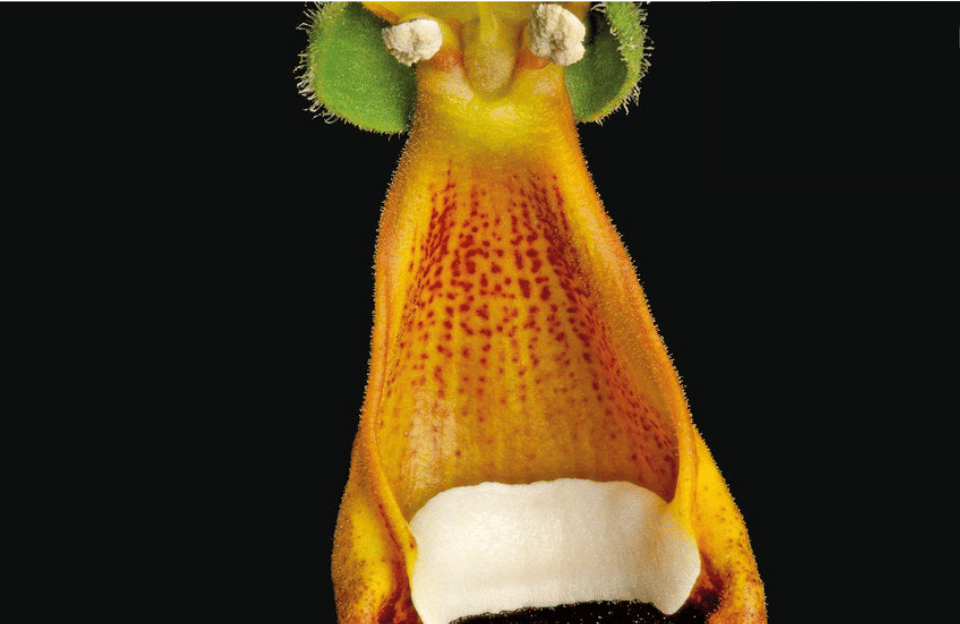
The Deceivers: Orchids that mimic female wasps to attract mates, or flowers that smell like rotting meat to lure fly pollinators—all documented in startling detail.
A Call to Observation
This new visual frontier does more than advance science; it fosters a deep public connection. Seeing the intricate fit between a hummingbird\’s beak and a trumpet flower, or the specialized hairs on a bee\’s leg designed to hold pollen, transforms abstract \”ecosystem services\” into tangible, breathtaking interactions.
\”My hope,\” says Vogel, \”is that when people see these images—the sheer engineering and beauty of it—they understand that pollination isn\’t just a background process. It\’s a dynamic, living drama performed by countless tiny actors. And we are utterly dependent on its success.\”
By watching their dust, we are learning to see our world more clearly, one grain at a time.
Interested in pollinator photography? Experts recommend starting with a standard macro lens (60mm or 100mm), a diffuser for your flash, and immense patience. The best tool, however, is simply time spent quietly observing a flowering plant.