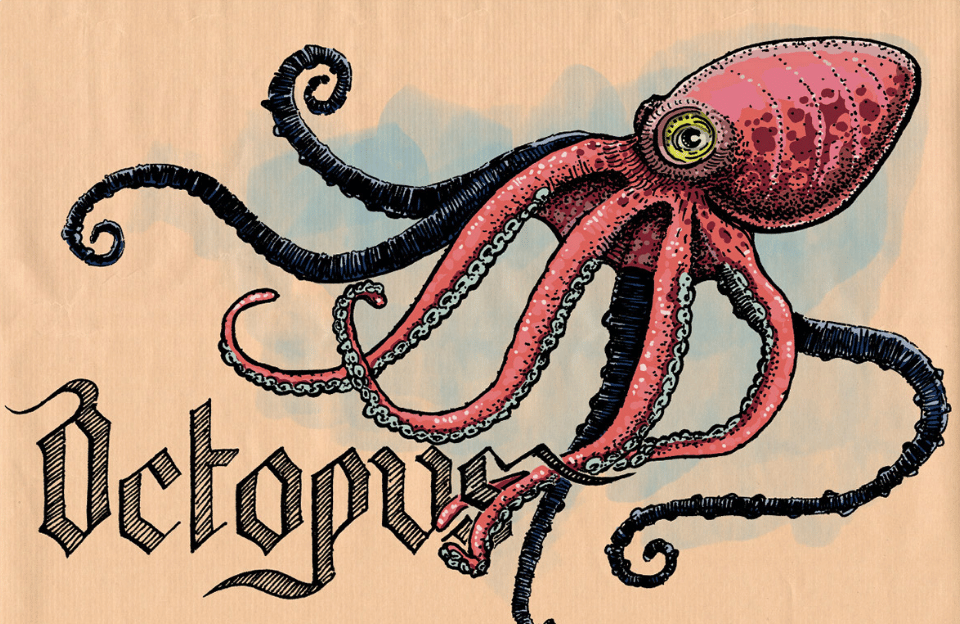
In the shadowy depths of the ocean, a form of intelligence pulses that is profoundly alien, yet dazzlingly complex. The octopus, with its eight sucker-lined arms, can solve puzzles, open jars, and even engage in acts of what appears to be playful mischief or deliberate deception. Its cousin, the squid, exhibits sophisticated social communication through dynamic skin patterns. For decades, scientists have pondered the origins of this remarkable cognitive prowess, which evolved entirely independently from our own vertebrate lineage. Now, groundbreaking research points to a surprising source: a profound genetic oddity that sets these soft-bodied cephalopods apart from nearly all other animals. The secret to their smarts may lie not just in what genes they have, but in how they edit them—on the fly, and on a massive scale.
The RNA Rewrite: A Different Kind of Genetic Toolkit
At the heart of every animal’s biology is the central dogma of molecular biology: DNA is transcribed into RNA, which is then translated into proteins—the workhorses of the cell. Our own intelligence is built upon genomic complexity: we have a large number of genes that are intricately regulated, allowing for the development of complex neural circuits.
Cephalopods, however, seem to have taken a radically different path. Landmark studies, primarily on the common squid Doryteuthis pealeii and the octopus Octopus vulgaris, have revealed an extraordinary fact: they engage in unprecedented levels of RNA editing.
RNA editing is a process where the sequence of a messenger RNA (mRNA) molecule is altered after it is transcribed from DNA but before it is translated into a protein. The most common form in animals involves enzymes called ADARs (Adenosine Deaminases Acting on RNA), which convert adenosine (A) to inosine (I), which the cellular machinery reads as guanine (G). This can change the amino acid instruction in the resulting protein, creating a variant not directly encoded in the DNA blueprint.
While humans and other mammals use RNA editing sparingly—affecting a tiny fraction of neural proteins—cephalopods have turned it into a wholesale strategy. In their nervous systems, over 60% of neural-related transcripts are edited, with changes that often alter the function of proteins crucial for neural excitability and signaling.
The Trade-Off: Innovation vs. Evolution
This discovery led scientists to a fascinating and counterintuitive correlation. The labs of Dr. Eli Eisenberg and Dr. Joshua Rosenthal found that this rampant RNA editing comes with a significant evolutionary cost. Genomic evolution in protein-coding regions of cephalopod nervous systems appears to have been severely slowed down.
The theory is elegant: if an organism can fine-tune proteins on the fly through RNA editing, there is less selective pressure to hardwire beneficial changes into the stable DNA genome. The squid and octopus have placed their bet on flexibility within an individual’s lifetime at the expense of rapid genetic evolution across generations. It’s a trade-off between adaptability and stability. While our intelligence is built on a relatively fixed genetic code that allows for complex, hardwired structures, cephalopod intelligence may be built on a protean, adjustable system that can respond to immediate environmental needs.
The Neural Advantage: Tuning the Brain in Real-Time
But what is the functional advantage of all this editing? The evidence points to a form of environmental fine-tuning of the nervous system. The edited sites are not random; they are concentrated in genes that encode ion channels and neurotransmitter receptors—the very components that govern how quickly a neuron fires, how it integrates signals, and how it communicates with its neighbors.
For a cold-blooded animal living in the dynamic and often chilly ocean, this could be a masterstroke of adaptation. Temperature dramatically affects the fluidity of cell membranes and the kinetics of proteins. An ion channel that works perfectly in warm surface waters might be sluggish in the deep cold. RNA editing allows the cephalopod to produce subtly different versions of these neural proteins, potentially “tuning” its nervous system to perform optimally across a range of temperatures and conditions. This could explain the octopus’s remarkable ability to learn and solve problems in varying environments. Its brain is not a static computer; it’s a dynamic, self-adjusting network.
Furthermore, this editing is highly regulated—it increases dramatically during development and is specific to different tissues. The brain of an octopus shows a different “editome” than its muscles or skin. This suggests the process is not chaotic but a precise, regulated mechanism for increasing neural proteomic diversity without expanding the genome.
Beyond the Octopus: A Portal to Alien Intelligence
This genetic oddity forces us to reconsider the very pathways to complex intelligence. On Earth, high cognition has evolved at least twice: in the vertebrate lineage (birds, mammals) and in cephalopods. We now see that these paths are not just anatomically different—with our centralized brains versus their distributed neural networks (an octopus has over half its neurons in its arms)—but they are fundamentally different at the molecular level.
Vertebrate intelligence is largely a story of genomic complexity and intricate developmental gene regulation. We build a complex, fixed blueprint and spend a lifetime learning to use it.
Cephalopod intelligence may be a story of transcriptomic plasticity and somatic adaptation. They build a versatile, editable blueprint that can be customized in real-time by the individual’s own nervous system.
This has profound implications. First, it suggests that intelligence in the universe could arise from biochemical architectures vastly different from our own. Second, it opens new avenues in neuroscience. Studying how a massively editable nervous system gives rise to learning, memory, and problem-solving could inspire novel bioengineering approaches or computational models for adaptive AI.
Unanswered Questions and Future Seas of Research
The RNA editing hypothesis is compelling, but the voyage is far from over. Key questions remain:
-
Causation vs. Correlation: Does extensive RNA editing cause advanced cognitive abilities, or is it merely a fascinating byproduct of their unusual neural physiology? Future experiments that inhibit ADAR enzymes in developing cephalopods could test if their problem-solving capacities diminish.
-
The Behavioral Link: Precisely linking specific RNA edits to defined behaviors—like learning to open a jar or using a coconut shell as a tool—is the next great challenge.
-
Other Cephalopods: Do less “intelligent” cephalopods, like nautiluses, also exhibit such prolific editing? Preliminary evidence suggests they do not, strengthening the link to complex behavior.
The discovery of cephalopod RNA editing is more than a genetic curiosity. It is a window into an alternative evolutionary solution to a universal problem: how to build a smart, adaptable mind. In the silent editome of the octopus, we find not just the secret to its alien brilliance, but a humbling reminder that nature’s ingenuity is wilder and more diverse than we ever imagined. Their intelligence is not written in stone in their DNA; it is scribbled in pencil in their RNA, constantly revised by the demands of a mysterious and challenging world.