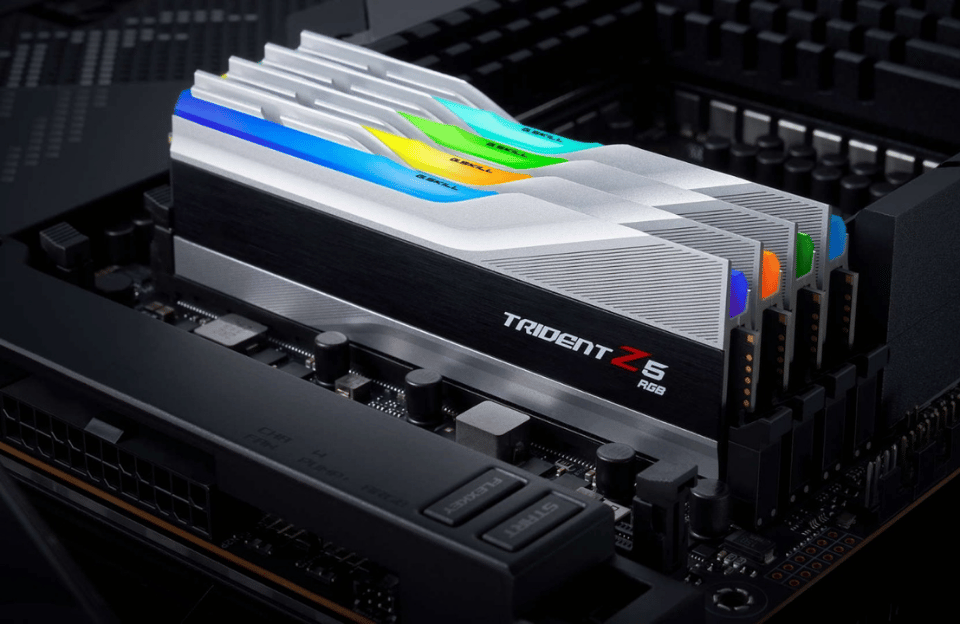
The memory market, a critical bellwether for the broader PC and server industry, is bracing for sustained turbulence as new data reveals a staggering price surge for DDR5 memory. According to a comprehensive report from industry analysts at TrendForce, the average contract price for DDR5 modules has skyrocketed by approximately 123% over the course of this year. Even more concerning for consumers and OEMs is the forecast for the coming year: a further brutal increase of up to 45% is projected for 2026.
This unprecedented escalation marks a sharp reversal from the memory market\’s recent state of oversupply and aggressive pricing. The primary drivers behind this seismic shift are a potent combination of constrained supply and exploding demand.
A Perfect Storm: Supply Constraints and AI-Driven Demand
On the supply side, the world\’s leading memory manufacturers—Samsung, SK Hynix, and Micron—have executed a disciplined strategy of production cuts throughout 2024 to correct inventory levels and stabilize prices. This reduction in output, while successful in ending the price freefall, has left the market ill-prepared for the demand tsunami now underway.
The dominant force fueling this demand is the relentless expansion of Artificial Intelligence. High-performance DDR5 memory is no longer just for premium gaming PCs; it has become essential infrastructure for AI-capable client devices (AI PCs) and, crucially, for the servers that power the global AI boom. While High-Bandwidth Memory (HBM) takes the spotlight for AI accelerator chips, AI servers require massive quantities of conventional DDR5 memory for the CPU side of operations. This has created fierce competition for available production capacity.
\”Manufacturers are strategically allocating a significant portion of their advanced semiconductor wafer production to more profitable HBM and LPDDR5 modules for mobile/edge AI,\” explains a TrendForce analyst. \”This has inevitably squeezed the output for standard DDR5, creating a significant supply gap just as demand from both the server and burgeoning AI PC markets takes off.\”
The Ripple Effect: From Data Centers to Your Next PC
The impact is cascading through the technology ecosystem:
-
Enterprise & Cloud: Data center operators are facing ballooning costs for server upgrades and expansions, potentially slowing deployment cycles or increasing cloud service costs downstream.
-
PC Market: The AI PC revolution, championed by Intel\’s Core Ultra (Meteor Lake, Arrow Lake) and AMD\’s Ryzen AI platforms, relies on DDR5. The price surge threatens to increase the bill of materials for OEMs, likely leading to more expensive laptops and desktops for consumers and businesses just as the AI PC push gains momentum.
-
DIY Enthusiasts: PC builders, a key market for retail memory kits, are witnessing sticker shock firsthand. The cost of a 32GB DDR5-6000 kit has effectively more than doubled in many regions, complicating upgrade plans and new system builds.
2026: No Relief in Sight
Looking ahead to 2026, analysts see no immediate respite. The forecast for a continued surge of up to 45% is predicated on several factors:
-
Persistent AI Demand: AI server deployment is projected to accelerate, not slow down.
-
Capacity Lag: Bringing new, advanced memory fabrication capacity online is a slow and capital-intensive process. Supply is expected to remain tight throughout most of 2026.
-
Market Transition: The gradual phase-out of DDR4 in favor of DDR5 as the mainstream standard will continue, funneling more demand toward the already strained DDR5 supply.
A New Era for Memory
The memory industry has entered a new phase characterized by strategic allocation and premium pricing for performance-critical modules. The days of perpetually cheap, abundant DRAM appear to be over, at least for this cycle. For businesses and consumers alike, the message is clear: the underlying cost of computing power is rising, driven fundamentally by the world\’s insatiable appetite for artificial intelligence. Budgeting for hardware upgrades in 2025 and 2026 will require factoring in this new, more expensive reality for system memory.