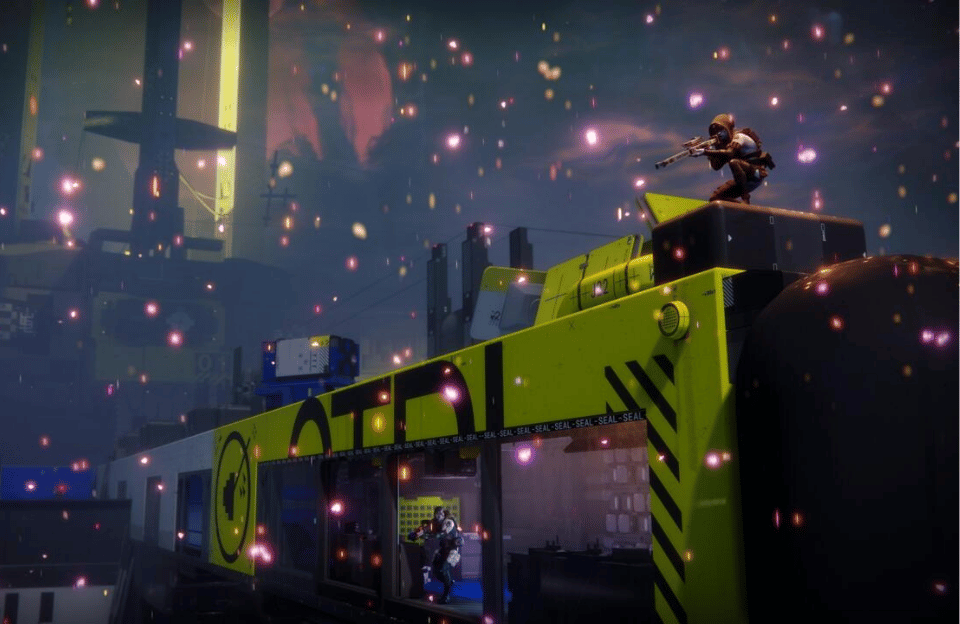
We started on Perimeter, the map tuned to provide the “easiest” experience in Marathon, and spent the next 15 minutes trapped in the very first building we entered, fighting every single team of player “Runners” in the match.
It was GameSpot senior producer Jean-Luc Seipke’s first match in Bungie’s online first-person extraction shooter, and it was nothing if not a trial by fire. Together with our matchmade teammate, we battled down hallways and around corners, flanking and catching opponents out, dying and reviving one another time and again. We came back from near-defeat repeatedly, hanging on by a thread.
At one point, with my guns completely dry, I slipped past an opponent by hopping over a railing to a lower floor, only to sneak back up the stairs, find them facing away, and knife them in the back until they fell. Another time, an invisible Assassin character lost us in a cloud of smoke, and I jumped through broken windows into the room where we’d last seen them, hoping to flank—only to find them hiding in a corner, a claymore at the door, ready to ambush my teammates. They never even saw me as I machine-gunned them.
We had wandered straight into one team, only for the gunfire and chaos to draw a second the moment we defeated the first. No sooner had we revived and rearmed than a third rolled in. Somehow, we beat them all.
At the end, I was shaking, my heart pounding. We had cleared the entire map of other players and had been fighting nonstop for over ten minutes. Jean-Luc would exfil with five kills and as many revives, at times carrying the whole team on their back.
These are the moments that keep me coming back to Marathon.
High Stakes, High Rewards
Like any extraction shooter, Marathon is all about stakes. You launch onto a large map set in a defunct extrasolar colony on Tau Ceti IV, carrying only the gear you bring. The goal is to scavenge better weapons and equipment from the colony’s ruins or from the pockets of players you defeat. But you only keep what you escape with. Every run ends either with your team huddled around a matter transport beacon, waiting to beam up with your winnings, or in a pool of purple robot blood with nothing but disappointment.
The fact that you can win or lose big on every run is what elevates Marathon‘s excitement. The game includes proximity voice chat, allowing for potential truces or temporary alliances with other players you encounter. But at its heart, Marathon is a competitive shooter in which you and your squad aim to take down other teams whenever possible. As might be expected from Bungie, a studio renowned for its shooters, Marathon excels at this.
The game is filled with spacey, boxy guns rendered in a bright retro-future aesthetic that harkens back to Marathon‘s roots as a pseudo-sequel to Bungie’s 1990s Mac shooter series. Weapons are bulky, heavy, and incredibly satisfying to fire, and Bungie supplies an extensive arsenal. The entire armory is impressively fun to use, and each weapon feels suitably deadly thanks to a quick time-to-kill—meaning even starter loot can be effective. Runners are relatively easy to drop, especially when a team works well together, resulting in battles that are fast and intense. They last just long enough to get your heart rate up, but not so long that they drag or leave you frustrated.
Weapons are highly modular, and each can be improved with mods found in the field or purchased in the Armory, a shop where character progress unlocks new gear to buy with match earnings. Marathon‘s loot system uses the standard color-coded rarity system, but a weapon’s rarity is determined entirely by its mods. This smart system incentivizes customization while allowing you to get comfortable with each gun’s feel and mechanics without worrying about frills. It also means you can improve any gun quickly, whether in the field or back at home.
Shells, Abilities, and Roles
Marathon adds to its strong foundational gunplay with a series of character classes, or Shells, that offer different abilities and give players specific roles on their squad. Some Shells have different movement capabilities—like a dash or a double-jump—but all have a lower-powered Tactical ability and a higher-powered Prime ability. Tactical abilities include deploying med drones that slowly heal teammates or creating a personal riot shield-like energy barrier that absorbs incoming fire.
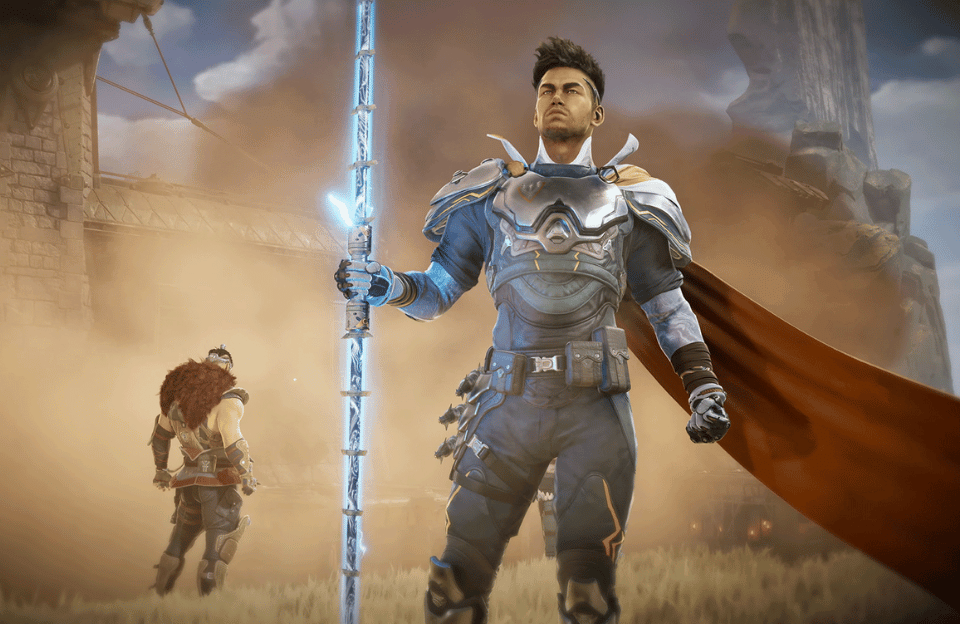
Prime abilities, equivalent to “ultimate” abilities in other games, are powerful enough to turn the tide at a decisive moment but have lengthy cooldown timers. You can turn briefly invisible as an Assassin or launch a volley of missiles as a Destroyer, but once used, you’re waiting several minutes for a recharge—a lifetime in an active firefight.
Marathon currently includes six Shells, plus the solo-only Rook Shell, and each offers enough distinction to make experimenting with and combining them worthwhile. They’re excellent for establishing a playstyle or filling a specific role for your squad, and used well, they can be hugely effective in battle. Most importantly, they add significant variety to the base experience. Heading into a fight as a Vandal feels very different from dropping in as a Thief, despite both having enhanced movement capabilities. Playing your Shell well can help your team hum through tough matches, even if you’re not racking up the most kills.
Factions, Contracts, and Progression
Your primary goal in any given run is to complete contracts—quests that earn experience, rewards, and reputation with each of the game’s factions. Standing in your way are robots deployed by the UESC, Earth’s government, as it tries to reclaim the lost Tau Ceti colony. These robots serve as the ambient threat on any map and are intense enemies in their own right. They’ll take you out fast if you’re not cautious, and they often move and act like Runners—working to flank, blasting you with grenades, and leveraging abilities like invisibility. They’ll even sometimes mimic Runners’ callouts. Even without other players, the bots put up a formidable fight, and it can sometimes be difficult to distinguish bot from human—a deliberate design choice that makes you take these enemies seriously, though it can also create frustrating jump-scares early on.
But it’s the factions you work for that truly define the Marathon experience. They are mostly massive corporate conglomerates, each with its own specific flavor and focus, all of them sterile and cold in a way that feels potentially malicious. Each faction has its own spooky AI representative, introduced through gorgeous, glossy corporate ads that are both satirical and subtly threatening.
More than gathering better loot, your real endeavor is leveling up your reputation with factions to access nodes on their upgrade trees. Each tree offers boosts that enhance overall abilities—like amping up melee damage or increasing fall resistance—as well as upgrades that unlock specific products for purchase in the Armory.
The faction system is one of Marathon‘s better innovations for the extraction shooter genre. It provides players with numerous ways to grow their characters while pursuing specific goals. Completing a contract for a faction is the best way to advance, netting significant reputation and specific rewards while advancing the game’s story. But you earn faction reputation for almost everything—from looting specific boxes, to fighting other players, to escaping with certain items. This means you can often continue progressing toward your goals whether you’re winning or losing. And since factions are leveled individually, each dishes out specific types of rewards and can provide plenty of equipment to refresh your inventory after losses.
That’s the other half of what makes the faction system work: it constantly rewards you with loot. Leveling up happens regularly, and each level delivers care packages full of needed equipment. All that free stuff helps absorb the sting of losing your best gear on the battlefield. After 25 hours with the game, I often left faction rewards unclaimed simply because I knew I’d have to sell items to make room for new gear. This steady flow of free equipment means that while the stakes are high for losing a match, you’re never completely wiped out.
The User Interface and Learning Curve
It must be noted that the faction system also contributes to what is likely the toughest aspect of Marathon: its confusing user interface. Whenever you’re not in a match, you’ll be digging through menus—menus to organize inventory, menus to buy new gear, menus to find contracts and objectives, menus to pick and customize your Shell, menus to read lore and unlock cosmetics. Once you’ve spent some time with it, the UI is not nearly as difficult to navigate as some complained about during the open beta, but it can still be overwhelming. Add the game’s copious loot—almost all of which has specific, important uses like healing status effects, tracking enemies, or upgrading faction trees—and it amounts to a steep learning curve and a lot of time spent reading rather than shooting.
Marathon vs. Arc Raiders
Marathon has drawn frequent comparisons to Arc Raiders, another recently released extraction shooter. The games have more in common than they do in contention, but Marathon exceeds Arc Raiders in its presentation and faction systems. Much has been made about Embark Studios’ use of AI in creating its faction characters, and Marathon‘s factions surpass them in personality and story development.
The approach to loot in Marathon is also cleaner. Arc Raiders is full of junk you pick up without a clear understanding of its purpose, while most of Marathon‘s items serve a clear function in battle. As a result, you spend less time managing inventory—there’s no recycling junk, breaking items down into components, or crafting.
The primary difference, however, comes down to the sort of experience you want. Arc Raiders leans toward a more social atmosphere, with an often-helpful community and players focused on questing and environmental challenges rather than each other. Hostile players exist, but cooperation is a bigger part of the experience. Marathon is more competitive, with greater emphasis on shooter mechanics and many players who shoot first and ask questions never. That doesn’t make cooperative elements impossible—and Bungie could easily emphasize those aspects with future updates—but currently, Marathon feels closer to something like Fortnite or PUBG.
Frustrations and Friction Points
Like any extraction shooter, Marathon can be deeply frustrating. A run of tough matches and bad beats can leave you playing with low-tier free gear again, matching against better-equipped opponents, and getting toasted for several runs in a row. Even with the measures Marathon has in place to get you back on your feet, losing tends to compound. It’s not uncommon to attempt the same contract three, four, or five times, which can drain the fun quickly—especially when playing alone or with random teammates.
It’s easy to lose a lot of time and effort as momentum stalls. That’s made worse by the weakest aspect of the contract system: you can only advance one contract at a time. Heading to Dire Marsh hoping to hack terminals for a contract, but spending the whole time fighting other teams before dying, is how these games sometimes go. But it’s disheartening when you have a contract for defeating other teams that you would have fulfilled had you chosen it, yet you made no progress on either. There is a degree to which Marathon could respect your time a little more—perhaps by allowing you to match one of its duller repeatable contracts with a story-focused Priority contract. As it stands, the one-contract system can feel like it exists to artificially stretch playtime rather than increase enjoyment.
Battle Pass and Monetization
Like other live-service shooters, Marathon includes a battle pass system dedicated to delivering cosmetic items for guns and Shells. It operates in familiar fashion: unlocking rewards as you play, purchased with a passively accumulated currency called Silk. The battle pass includes a paid track and a free track, with the upside that you can generally grab items you want and skip those you don’t, rather than earning rewards in a set order.
The paid pass includes a few “schema” that allow purchase of specific base guns and items from the Armory, giving paid players a slight jump on unlocking those options. But any advantage is negligible—I struggled to accumulate enough credits to buy anything beyond ammo and healing items, and these are base guns you can also earn through rank-ups or extraction. Ultimately, the battle pass offers nice customization options with no pay-to-win elements, and it’s easy enough to ignore. Bungie has stated that reward passes won’t expire when seasons end, eliminating time pressure or fear of missing out.
The Road Ahead
I’ve already sunk nearly 30 hours into Marathon, and it has quickly eclipsed many of my other go-to multiplayer games. The question is how the game will evolve over time—whether through new Shells, contracts, story, or enemies. There are large-scale events on several maps, and I’m interested to see what other secrets are uncovered. Bungie has content lined up for this month, including an endgame location called Cryo Archive that adds a fourth map, as well as a ranked mode with additional rewards. We will update this review as that content becomes available and we get a clearer picture of Marathon‘s long-term trajectory.
So far, though, I’m having a blast. Even frustrating losing streaks often just have me jumping back into another match, eager to replace lost gear. Most battles are fun, tense, and tactical, pushing you to play smart and work with your teammates. How Bungie supports Marathon over the long term will determine whether it can sustain interest like other successful live-service games. But the fundamentals are incredibly strong, and Marathon feels far richer and deeper than its 20-minute matches would suggest. Tau Ceti IV beckons, and there are runs to complete.