Our most pressing questions after the latest journey to Pandora.
Sci-fi fans, mount your ikran and fly to the nearest theater: Avatar: Fire and Ash has arrived. The third chapter in James Cameron\’s planned five-part space opera finds Jake Sully and his family continuing their fight against the Resources Development Administration (RDA) and the Recombinant Colonel Miles Quaritch. This time, they also face a new threat: Varang and the fire-worshipping Ash People. While reviews are broadly positive with some caveats, IGN’s Max Scoville praised the film as a satisfying conclusion to the first Avatar trilogy, awarding it a 9/10 and calling it “an immensely gratifying finale that’s well worth the wait.”
Yet, despite its technical marvels and thrilling action, certain elements of the film leave us puzzled. Here are the biggest questions we’re left with after watching Avatar: Fire and Ash.
1. Why Isn\’t Varang a More Central Character?
Based on trailers and the title, viewers might expect Varang (Oona Chaplin), leader of the Ash People, to be the primary antagonist. She is indeed the film\’s most captivating new addition—a warrior queen/blood witch hybrid who brings a fresh, menacing energy to the franchise. After forging an alliance (and more) with Colonel Quaritch (Stephen Lang), Varang seems poised to become a co-villain, ready to bring fire to the Sully family. However, her prominence fades in the latter half as the story reverts to a rehash of The Way of Water’s finale. We learn little about the Ash People\’s culture or their connection to fire beyond a few weapons and rituals, with only one brief scene set in their volcanic homeland. While Varang is slated to return in future sequels, given this film\’s title, it\’s disappointing that the \”Fire and Ash\” people play such a limited role.
2. Why Didn\’t Eywa Aid the Ash People?
The Ash People (or Mangkwan clan) uniquely reject Eywa, the Na\’vi goddess. Varang explains that in her childhood, a volcanic eruption destroyed their forest, and Eywa offered no help. This betrayal turned them into raiders who despise Eywa and her followers. This raises a crucial question: why did Eywa ignore their plea? In the first film, Neytiri states that Eywa “doesn’t take sides” and maintains life\’s balance, yet across three movies, Eywa consistently intervenes to aid the heroes in final battles. Does Eywa show favoritism? Or will future installments reveal why the Mangkwan were forsaken?
3. Why Did Eywa Resist Kiri\’s Connection?
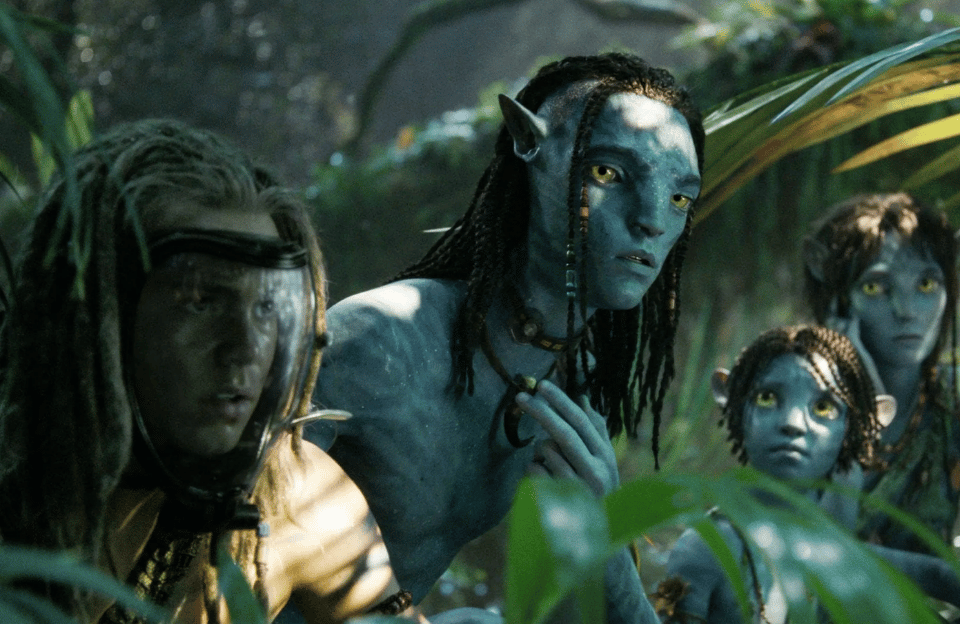
A key subplot involves Kiri (Sigourney Weaver) repeatedly—and dangerously—attempting to commune with Eywa, only to be rejected. Her human allies warn that further attempts could induce fatal epileptic shock. While her condition was introduced in The Way of Water, Eywa\’s resistance is new here and unexplained. Kiri, a Na\’vi akin to a Jedi, can sense Pandora\’s life force and has used her powers to save lives. Why does Eywa refuse her connection until the very end, when Spider and Tuk come to her aid? Hopefully, the next film will provide answers.
4. What\’s the Deal with the Wind Traders?
Fire and Ash introduces a second new clan: the Tlalim, or Wind Traders, led by Peylak (David Thewlis). They travel via medusa-drawn airships and feature in an early action sequence where the Sullys defend them from a raid. However, they appear with little exposition and primarily serve as a plot device to split the characters into groups. Their stated desire to remain neutral by avoiding association with Toruk Makto (Jake) is confusing—the only Na\’vi hostile to Jake are the Ash People, who are already their enemies. Do they trade with the RDA? This, too, feels like a thread for future movies.
5. Did General Ardmore Die?
General Frances Ardmore (Edie Falco), Quaritch\’s superior and the RDA\’s commanding officer, takes a direct role in the battle against the Metkayina. When her flagship, the Dragonfly, is doomed by a magnetic field, she orders an evacuation. A final shot inside the ship shows a figure in a uniform resembling hers—did she escape, or go down with her vessel? Her fate remains unclear, a significant point given her high rank within the villainous faction.
6. What Happened to Dr. Ian Garvin?
Dr. Ian Garvin (Jemaine Clement), the marine biologist disgusted by the RDA\’s Tulkun slaughter, helps Jake escape captivity. His turn against the RDA is well-motivated, but his fate afterward is unseen. He doesn\’t join the human allies at the Omatikaya outpost, and the RDA would certainly punish his betrayal. Did he escape on his own? His whereabouts remain a mystery.
7. What Was the RDA\’s Original Plan for Breathing?
A pivotal moment occurs when Spider (Jack Champion) is saved from Pandora\’s toxic air by Kiri, who alters his physiology with a fungal lung growth. RDA scientists later discover this and aim to replicate it for colonization. This begs the question: what was the RDA\’s plan for human respiration before this discovery? General Ardmore\’s mission is to make Pandora humanity\’s new home, yet after decades of effort, was the permanent use of exopacks the only solution? It seems a major oversight for a colonization effort.
8. Why Does Jake Try So Hard to Redeem Quaritch?
Jake repeatedly attempts to convince Quaritch to embrace his Na\’vi side and defect. This persistence is puzzling given their history: Quaritch has repeatedly tried to kill Jake and threatened his family, even vowing to \”kill your whole family.\” While Quaritch showed a flicker of humanity by protecting Spider in The Way of Water, his overall actions remain ruthless. Jake\’s faith in his enemy\’s potential for change feels unwarranted, and since Quaritch doesn\’t fundamentally switch sides here, will this narrative thread lead anywhere?
9. Why Split the Story When It Retreads Previous Ground?
Originally, the Avatar series was planned as four films. Fire and Ash was added when Cameron decided to split The Way of Water into two parts. However, this installment recycles numerous plot elements: Spider\’s capture and cell confrontation with Quaritch; a standoff requiring Jake\’s surrender; Kiri\’s life-threatening seizure while connecting to Eywa; and a final aquatic battle near the Metkayina village, complete with a Tulkun capsizing a ship. Given this repetition, the decision to expand to two films feels underutilized. Why not feature a finale at the Ash People\’s volcano, for instance?
10. Will There Be More Avatar Films?
The overarching question is whether the ambitious five-film plan will be realized. While Fire and Ash is unlikely to flop financially, its story leaves many status quos unchanged (the Sullys remain with the Metkayina, Quaritch is still a villain). Will this satisfy audiences enough to sustain momentum? Cameron has acknowledged that if this film isn\’t profitable, he may conclude the saga as a novel. He has also hinted at stepping back from hands-on involvement in future projects. With a portion of Avatar 4 already filmed, at least one more sequel seems probable. But will the story reach its planned fifth chapter, slated for 2031? Only time will tell, but we remain invested in seeing Pandora\’s epic journey conclude.